
Teaching students to make inferences can feel like solving a puzzle—one where the pieces don’t always seem to fit right away. But when you have the right tools, strategies, and worksheets, that “aha!” moment becomes a lot more achievable.
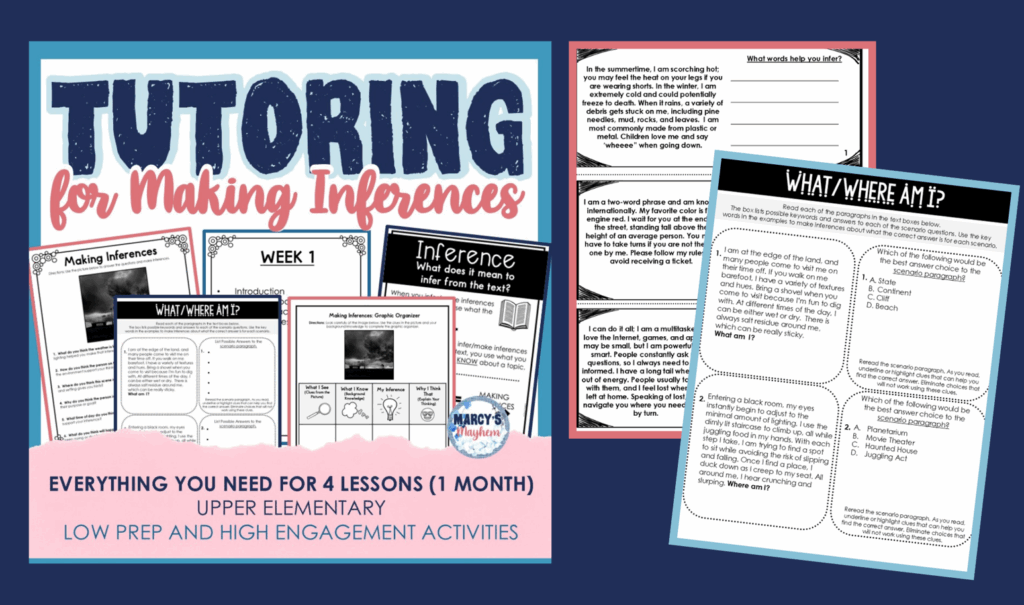
If you’re a tutor, interventionist, or small group reading teacher looking for practical, low-prep support, my Making Inferences Tutoring Lesson Plan is exactly what you need to build confident readers while saving valuable planning time.
Making Inferences Worksheet That Matters in 4th and 5th Grade
In upper elementary, students are expected to dig deeper into texts and think beyond what is directly stated. Making inferences is at the core of higher-order thinking, comprehension, and test success. Yet for many students, it’s a tricky skill to master without repeated practice and direct instruction.
That’s where a well-structured making inferences worksheet, combined with guided support, makes a big difference.
What Makes This Tutoring Lesson Plan So Effective?
This all-in-one resource was created with busy educators in mind. Whether running a summer tutoring session or guiding a small intervention group during the school year, everything you need is at your fingertips.
✅ Here’s What’s Included:
•4 Weeks of Inference-Focused Lessons – Designed for 1-hour sessions with printable and engaging materials.
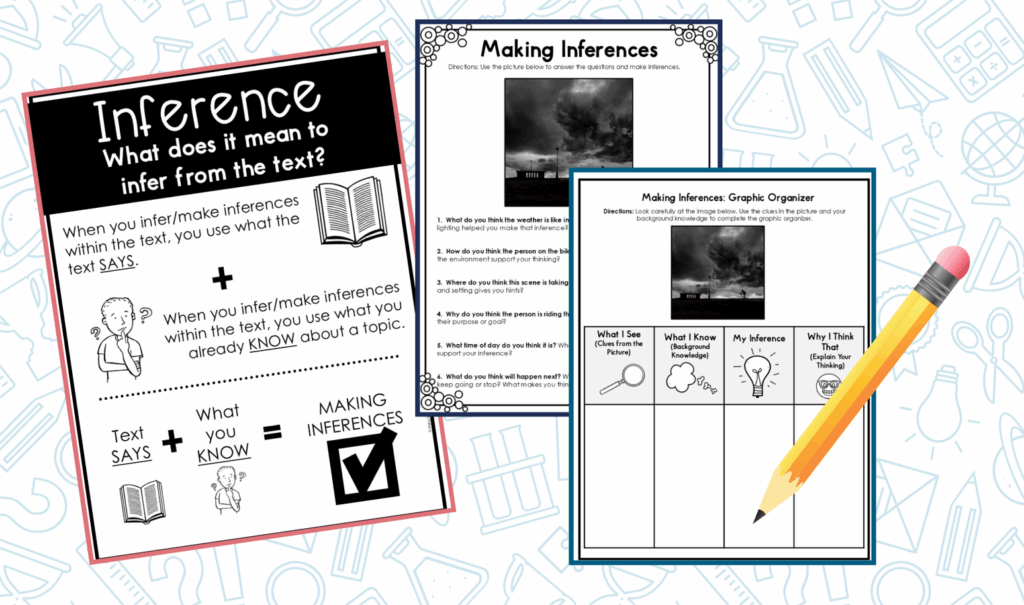
•Making Inferences Worksheets – Scaffolded for 4th and 5th grade readers.
•Inference Anchor Posters & Thinking Cards – Visuals that help solidify abstract thinking.
•Reading Comprehension Passages & Task Cards – Practice in various formats.
•Parent Communication Tools – Includes a tutoring letter to parents, sign-in logs, and daily report forms.
•Student Contract & Tracking Logs – Boosts accountability and encourages ownership of learning.
With these structured materials, you won’t just be reviewing strategies—you’ll be empowering students to understand how, when, and why they should read between the lines.
Using the Making Inferences Worksheet in a Tutoring Session
Here’s a quick look at how to make the most of each session:
1. Start with the Anchor Poster or Thinking Card
Review a visual or prompt that explains how to make an inference.
2. Model the Thinking Process
Use a short passage and think aloud as you conclude the clues and prior knowledge.
3. Guide Practice with a Worksheet
Let students highlight text clues, circle keywords, and write out their inferences with evidence.
4. Use the Task Cards for Review
These are perfect for warm-ups or wrap-up practice and keep the session interactive.
5.Reflect at the end of the session
Let students rate their confidence and reflect on what they’ve learned daily. Give students a sticky note and have them write down one thing they learned and one thing they could do better. Then, have them rate themselves on a scale of 1 to 10 with their confidence in using the skill.

A Resource That Builds Trust with Families
Tutors and teachers know that strong communication is essential. This resource includes editable letters to parents, contracts, and daily session notes so you can build transparency and rapport—something every parent appreciates.
Perfect for:
•After-school tutoring
•Summer reading programs
•Intervention blocks
•Homeschool support
•RTI/MTSS small group instruction

Ready to Strengthen Reading Skills?
This Making Inferences Tutoring Lesson Plan gives you the structure, flexibility, and materials to guide your students to success confidently. With the included making inferences worksheets, posters, task cards, and communication tools, you’ll be ready to tackle inference skills from every angle.
Check out this blog post on 👉 How to Use a Making Inferences Worksheet to Boost Critical Thinking in Upper Elementary
Try these other making inference worksheets for more practice.
Making Inferences: Reading Comprehension Passages
Reading Comprehension Practice (Over 50 Passages)
👉 You can also find me on TPT ➔ Marcy’sMayhem
& on ETSY ➔ Marcy’s Mayhem
Copyright © Marcy’s Mayhem
All rights reserved by the author
Permission to copy for single-classroom use