What Is the Stop & Think Reading Strategy?
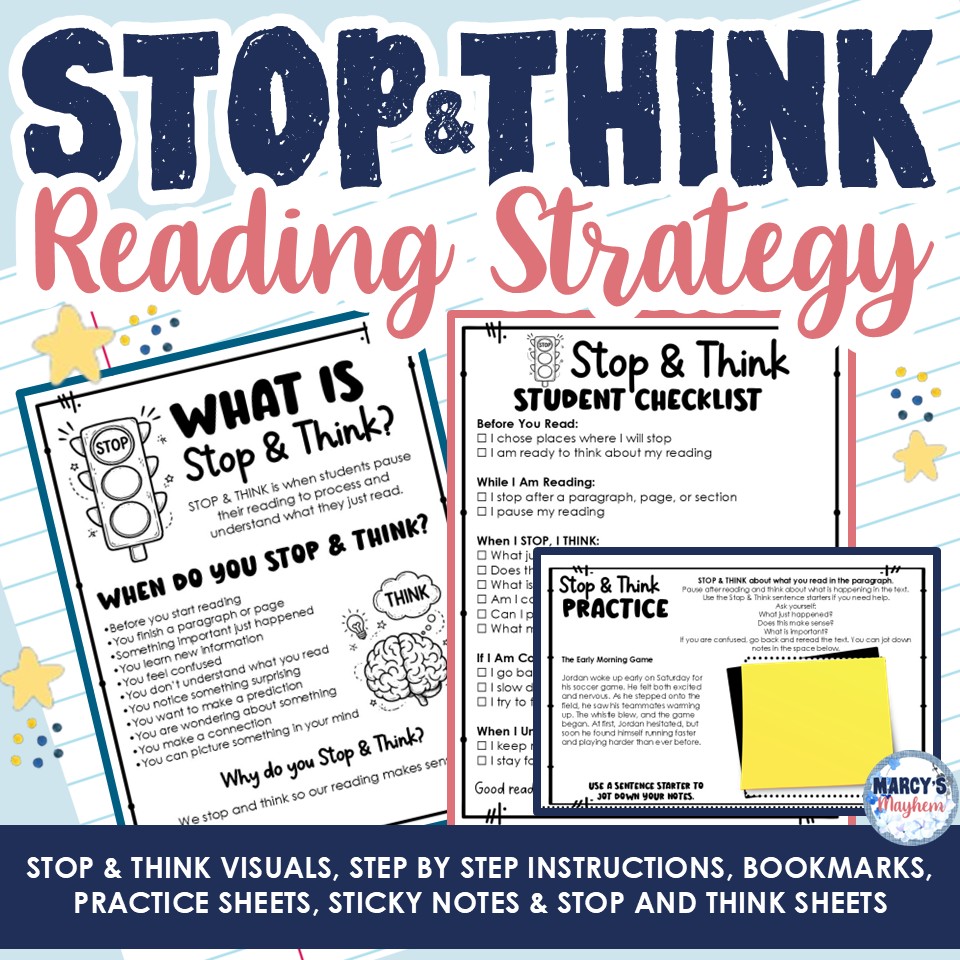
The Stop & Think reading strategy teaches students to pause while reading and mentally process what they just read.
Instead of rushing, students learn to:
- Stop at a natural break (paragraph, page, section)
- Think about what just happened
- Check if the text makes sense
💭 Students ask themselves:
- What just happened?
- Does this make sense?
- What is important?
- Am I confused?
This builds metacognition, which simply means thinking about their thinking while reading.
👉 This is especially helpful for struggling readers who tend to read without processing.
What Is the Stop & Think Reading Strategy?
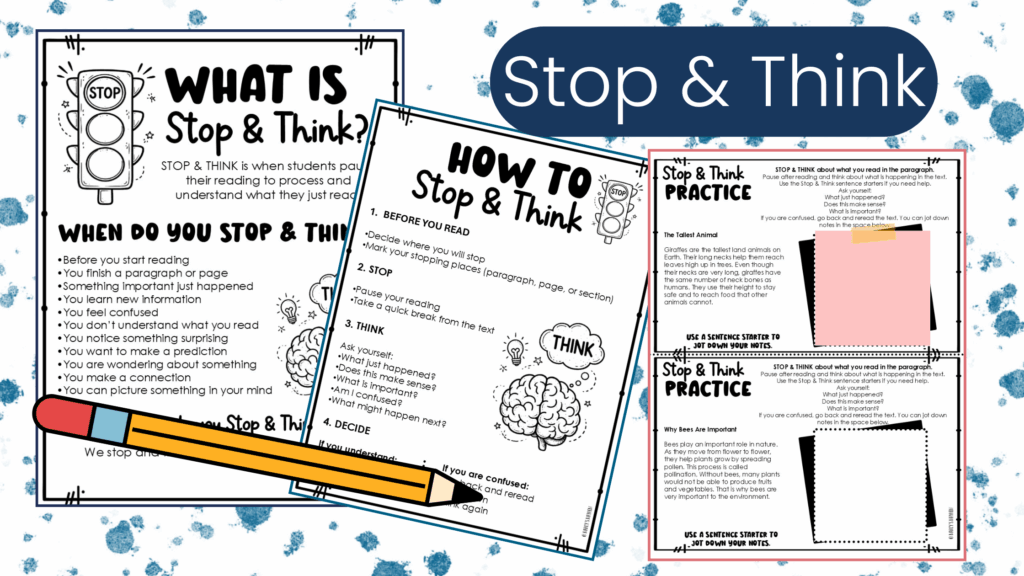
The Stop & Think reading strategy teaches students to pause while reading and mentally process what they just read.
Instead of rushing, students learn to:
- Stop at a natural break (paragraph, page, section)
- Think about what just happened
- Check if the text makes sense
💭 Students ask themselves:
- What just happened?
- Does this make sense?
- What is important?
- Am I confused?
This builds metacognition, which simply means thinking about their thinking while reading.
👉 This is especially helpful for struggling readers who tend to read without processing.
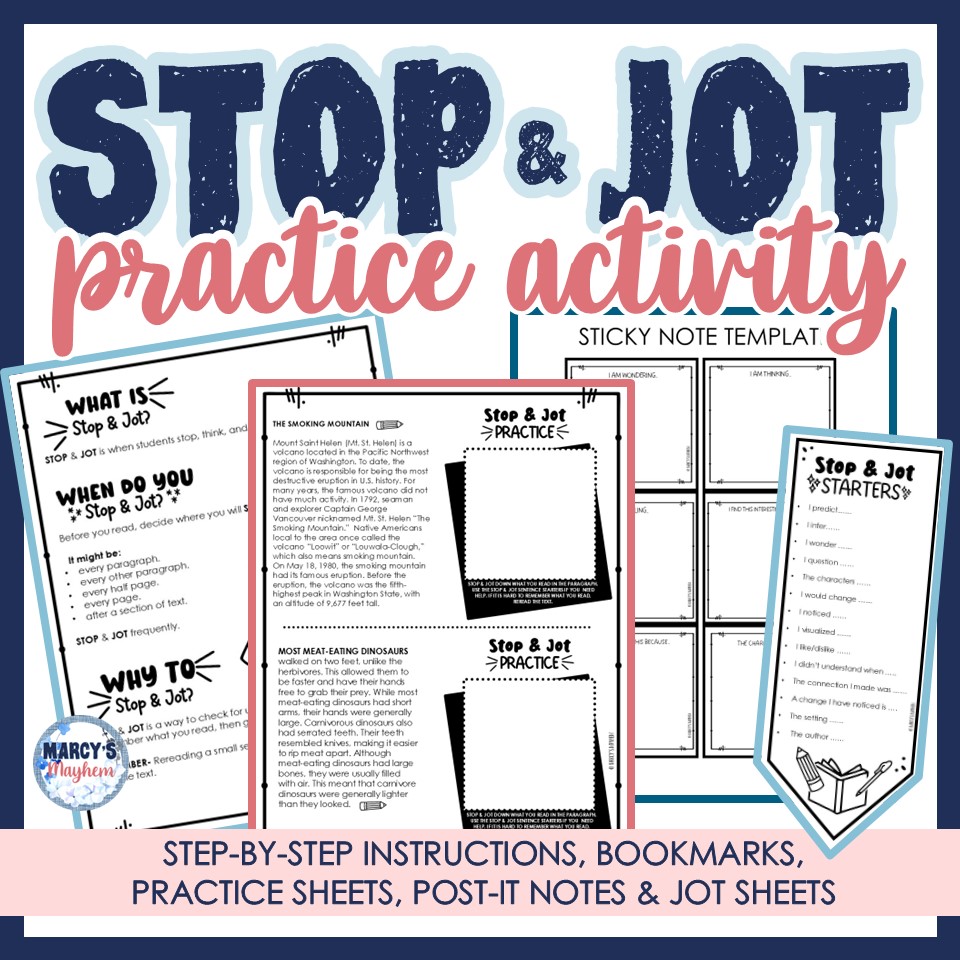
What Is the Stop & Jot Reading Strategy?
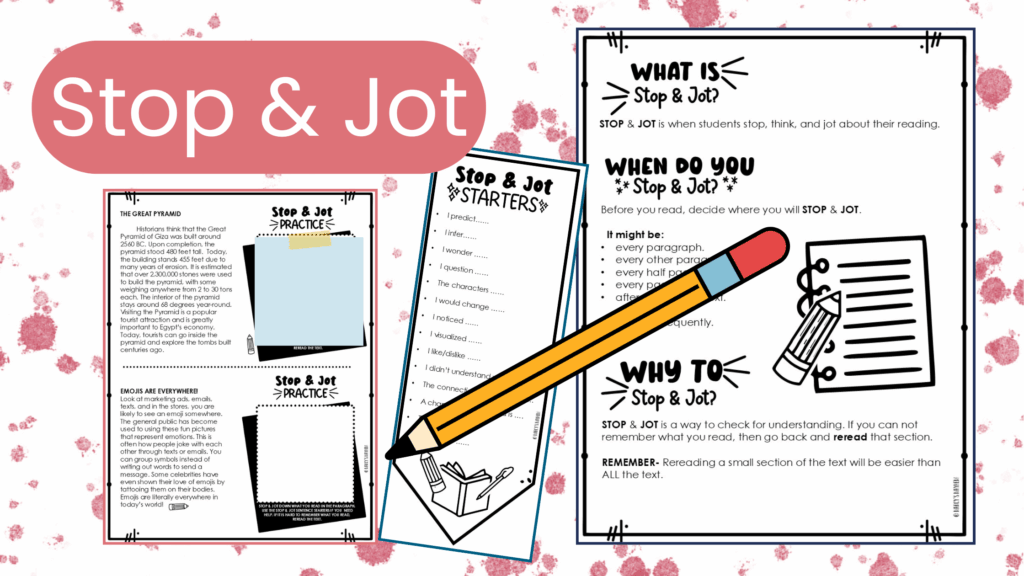
The Stop & Jot reading strategy takes things one step further.
After students think… they write down their thoughts.
This might look like:
- Writing on sticky notes
- Using bookmarks with prompts
- Filling out reading response sheets
📝 Students might jot:
- I learned…
- This reminds me of…
- I don’t understand…
- I predict…
This helps students:
✔ Stay accountable
✔ Organize their thinking
✔ Prepare for written responses
Stop & Think vs Stop & Jot: What’s the Difference?
| Stop & Think | Stop & Jot |
|---|---|
| Mental process | Written response |
| Builds understanding | Shows understanding |
| No writing required | Writing required |
| Helps students slow down | Helps students explain thinking |
👉 Think = Process
👉 Jot = Produce
Why You Should Use BOTH Together
Here’s where the magic happens 👀
When students only “jot,” they often:
❌ Write quickly without thinking
❌ Give surface-level answers
When students only “think,” they:
❌ Don’t always show their understanding
✅ But together:
- Students STOP & THINK first
- Then STOP & JOT their ideas
This leads to:
✨ Deeper comprehension
✨ Stronger written responses
✨ More meaningful discussions
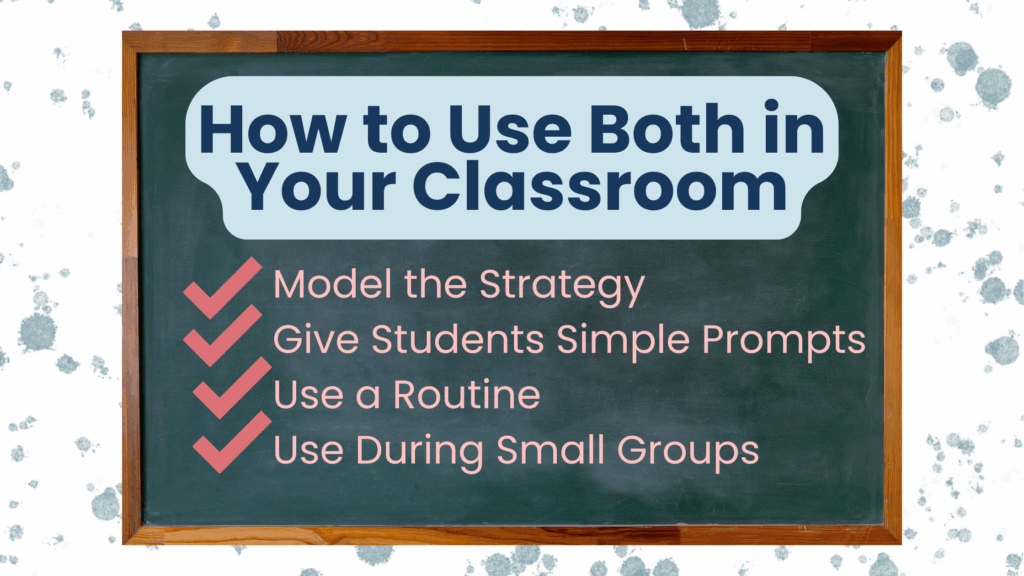
✔ Step 1: Model the Strategy
Read a short passage aloud and think out loud:
“Hmm… this part is confusing. I’m going to stop and think…”
✔ Step 2: Give Students Simple Prompts
Use:
- Bookmarks
- Anchor charts
- Sticky note templates
✔ Step 3: Use a Routine
Teach students this process:
👉 Read
👉 STOP
👉 THINK
👉 JOT
✔ Step 4: Use During Small Groups
This is where this strategy REALLY shines 👏
While you work with a small group, the rest of your class can:
- Read independently
- Use Stop & Think prompts
- Jot responses on sticky notes
👉 No more “What do I do?” interruptions
👉 Students stay engaged and accountable
Best Ways to Use These Strategies
These strategies work perfectly for:
✔ Guided reading
✔ Reading intervention (RTI)
✔ Independent reading
✔ Literacy centers
✔ Early finishers
✔ Test prep
And the best part?
👉 They work with ANY text
How This Improves Reading Comprehension
When students stop and think while reading, they:
- Catch confusion earlier
- Make stronger connections
- Understand key ideas
- Build deeper thinking skills
Research and classroom practice both show that active reading strategies like stopping and reflecting improve comprehension and engagement.
Teacher Tip
Start simple.
Don’t overwhelm students with too many prompts at once.
Introduce 2–3 prompts, model them, and build from there.
Ready-to-Use Resources
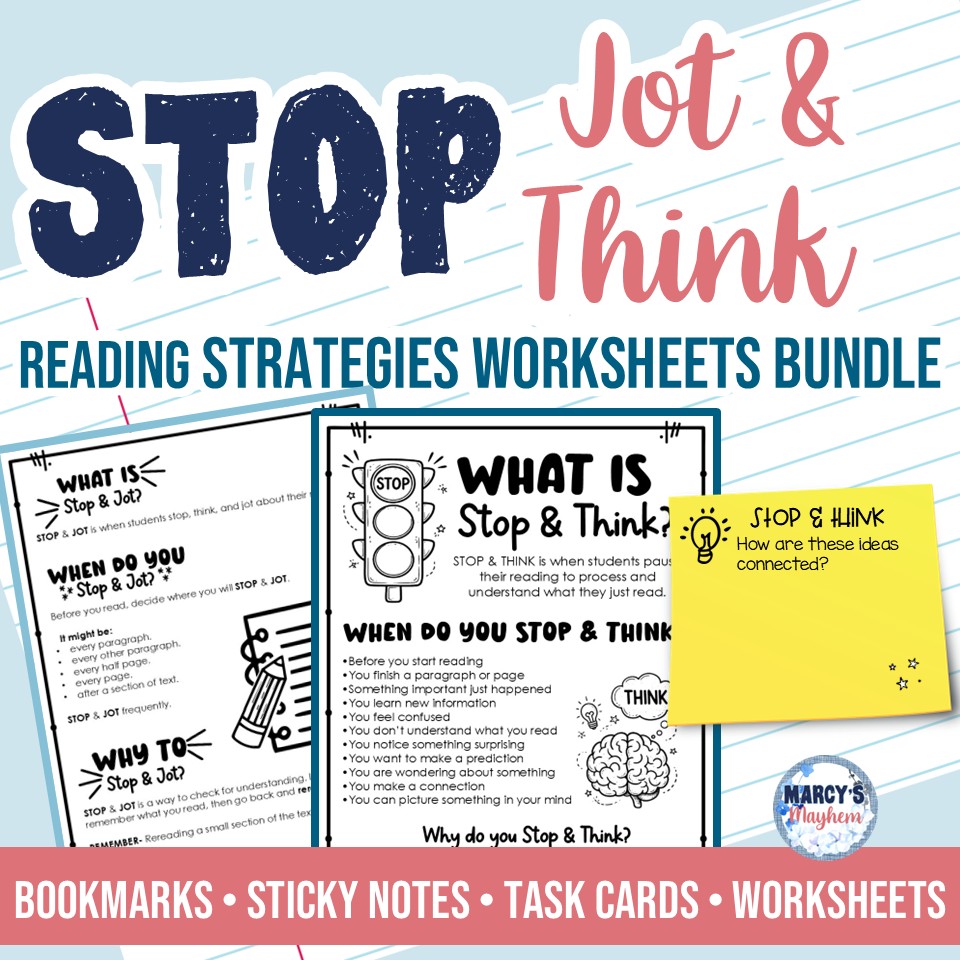
If you’re looking for a no-prep way to implement this immediately, I created resources that include:
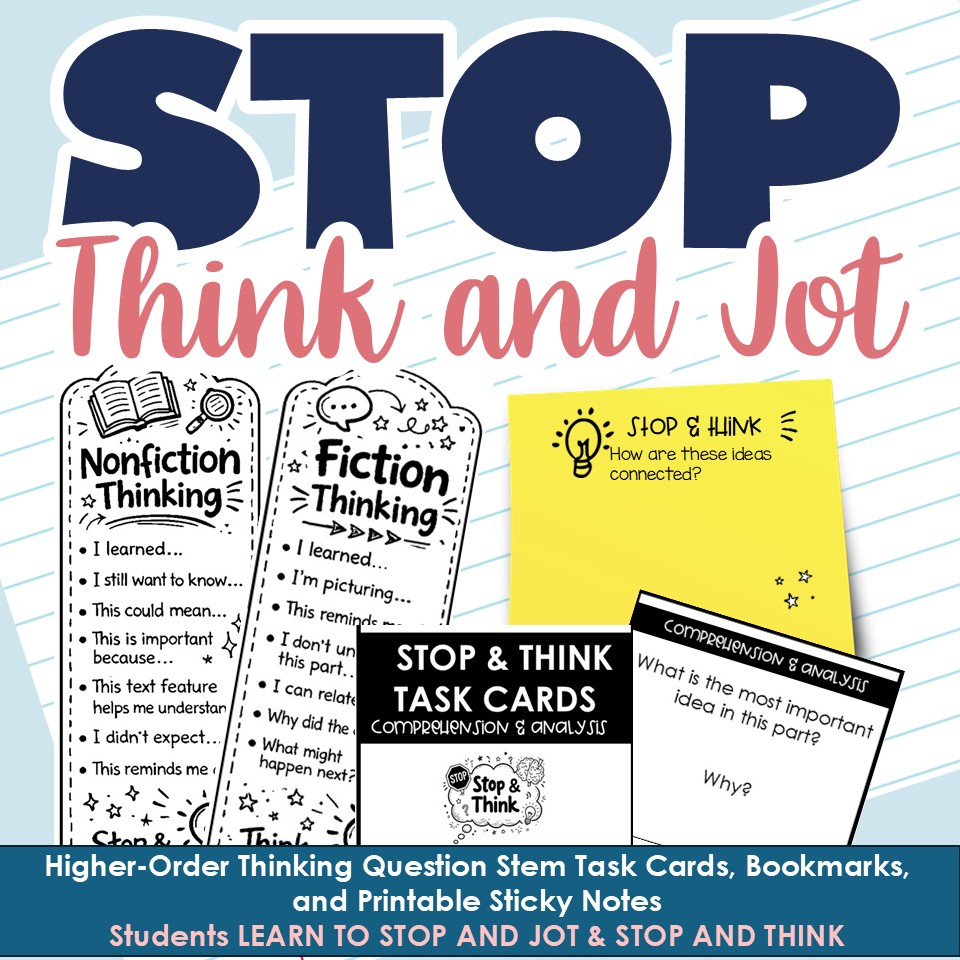
- Stop & Think visuals and small group notes
- Stop & Jot reading response sheets
- Fiction & nonfiction bookmarks
- Sticky note templates
- Higher-order thinking question stems
These are designed specifically for upper elementary classrooms and intervention groups. Click any of the covers below to take a closer look!